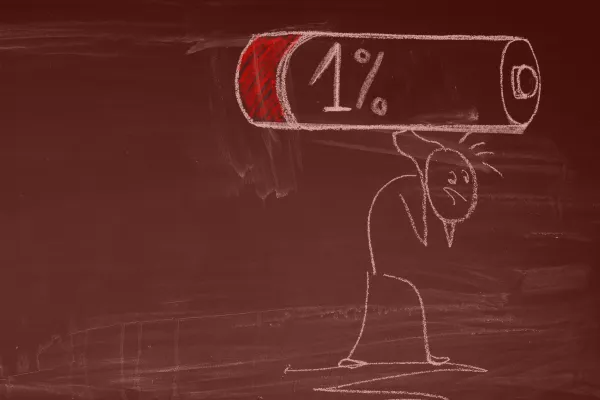
Burnout Isn’t Failure, It’s Feedback
Burnout Isn’t Failure, It’s Feedback
Reframing Burnout as a Signal, Not Shame
You didn’t plan to burn out.
But if you’ve searched phrases like “Christian burnout recovery,” “why am I exhausted despite success,” “burned out Christian leader,” or “Faith-based burnout coaching,” you’re not looking for clichés. You’re looking for clarity.
You didn’t wake up one morning and decide to be depleted. You didn’t set out to resent the very responsibilities you once Prayed for. You didn’t aim at cynicism, numbness, or quiet emotional distance. You aimed at Faithfulness, and that’s what makes this so confusing, because from the outside, you’re still producing.
Your bills are paid. Your team is functioning. Your Church role is filled. Your family isn’t in crisis. You’re not spiraling. You’re not self-destructing. You’re just… tired in a way that doesn’t respond to a weekend off.
That’s where many high-capacity Christians find themselves—functioning externally while thinning internally. This post isn’t about telling you to quit your Calling. It’s about helping you read what your exhaustion is trying to say, because burnout isn’t always failure. Sometimes, it’s feedback.
You planned to be Faithful. You planned to be responsible. Steady. Strong. The one people could count on. The one who didn’t flinch under pressure, and for a long time, that identity worked. Until it didn’t.
If you’re honest, the fatigue you’re feeling isn’t just physical. It’s deeper than that. It’s not just “I need a vacation.” It’s not just “this quarter is intense.”
It’s something harder to name.
You still Believe.
You still care.
You still show up.
But something feels thin, and here’s the dangerous part for high-capacity Christians: You’re tempted to interpret burnout as spiritual failure.
Maybe I’m not Praying enough.
Maybe I’m not disciplined enough.
Maybe I’ve lost my edge.
Maybe I’m just not strong enough anymore.
Let’s tell the truth. Burnout isn’t always rebellion. Often, it’s feedback, and if you don’t learn to read the feedback, you’ll misdiagnose the signal and double down on the very thing that’s breaking you.
The Misinterpretation That Makes Burnout Worse
High-functioning Believers rarely collapse dramatically. You don’t quit your job. You don’t renounce your Faith. You don’t disappear.
You compensate. You tighten your schedule. You optimize your calendar. You increase intensity.
You “recommit.” But as we explored in Why So Many High-Functioning People Feel Stuck, when internal strain rises, high performers speed up.
They don’t pause. They don’t reflect.
They produce. Until production becomes pressure, and pressure becomes depletion, and depletion becomes burnout.
The lie underneath it sounds noble: “If I were more Faithful, I wouldn’t feel this tired.” That’s not theology. That’s performance pressure dressed up in Bible language.
Burnout Is a Directional Problem, Not a Devotion Problem
Let’s get something clear. You can Love God sincerely and still be misaligned structurally. You can Believe Scripture deeply and still neglect your rhythms. You can be Called and still be unconditioned to carry that Calling long-term.
Effort doesn’t determine where you end up. Direction does. Burnout is rarely a lack-of-effort problem. It’s usually a misalignment problem.
Your values say one thing—your calendar says another.
Your Faith says Trust—your pace says panic.
You aren’t Faithless. You’re out of sync.
Burnout isn’t God punishing you. It’s your system telling you something is slightly off course, and slight misalignment compounds.
The Plane That Misses the Runway
Imagine a plane leaving New York for Los Angeles. The pilot is off course by one degree. Nothing feels wrong at takeoff. The cabin is calm. The altitude is steady, but over 2,500 miles? That single degree compounds into a 40-mile miss. That’s burnout. Not dramatic rebellion. Not catastrophic failure. Just small misalignments repeated long enough to become exhaustion.
You kept saying yes. You kept pushing through. You kept absorbing pressure. You kept postponing rest.
Individually? Harmless.
Repeated? Erosion.
Burnout is rarely about one massive decision. It’s about thousands of small ones.
What Burnout Is Actually Telling You
Before we go any further, we need to name something clearly: burnout is rarely random.
It usually follows a predictable arc. You say “yes” to something good. Then another good thing. Then one more opportunity that feels aligned.
You justify the added weight because it serves people. It advances the Mission. It reflects responsibility. It looks like Obedience, but you never recalibrate your capacity, and capacity, unlike calling, has limits.
Calling may be expansive. Capacity has to be conditioned. That’s where burnout begins—not at the point of rebellion, but at the point where structure no longer supports assignment.
Burnout says: Your current structure can’t sustain your current pace.
That’s not shame. That’s information, and information, received humbly, becomes wisdom.
Burnout often hides across domains—spiritual, emotional, physical, relational, and financial.
But before you fix anything, you have to reinterpret it. Burnout isn’t proof you’re weak. It’s proof you’ve been carrying more than your current conditioning can hold.
Calling and capacity aren’t the same thing. You may be exactly where God wants you but living in a way that can’t support it long-term.
The Deeper Layer: Control Disguised as Faithfulness
Let’s go one layer deeper. Burnout often hides an unspoken belief: “It’s all on me.” You’d never say that out loud, but your nervous system believes it. You overprepare. You overwork. You overextend. You over-anticipate failure.
Underneath it all is this quiet fear: “If I don’t hold this together, it will fall apart.” That’s not devotion. That’s control dressed as responsibility.
You are responsible for Obedience. You aren’t responsible for Omnipotence. Recovery begins when you separate those two.
When Rest Feels Dangerous
Here’s a simple diagnostic. When you stop pushing, not quitting, (just pausing) what happens inside you? Do you feel relief? Or guilt?
If rest feels irresponsible…
If slowing down feels threatening…
If margin feels unsafe…
Burnout is probably not about fatigue alone. It’s about identity fused to output. If you don’t know who you are apart from what you produce, you’ll always overproduce. That’s not a scheduling issue—it’s an identity issue.
Burnout often exposes the question you’ve been avoiding.
The Hidden Cost of Chronic Overextension
High-capacity Christians are especially vulnerable.
You’re wired for responsibility.
You’re wired for reliability.
You’re wired to carry weight.
That wiring is a gift, but unmanaged, it becomes a liability. You feel indispensable everywhere, and deeply present nowhere. You’re available to everyone, and emotionally thin at home.
Over time, the cost becomes subtle but real. You begin to resent interruptions that once felt meaningful. You respond sharply to small inconveniences. You lose curiosity. Your Prayer life shifts from intimacy to efficiency. You stop asking big questions and start surviving daily demands.
None of that feels like apostasy. It just feels like adulthood, but adulthood without intentional alignment slowly hardens into maintenance, and maintenance, when disconnected from meaning, becomes exhausting.
Burnout isn’t usually caused by dramatic sin. It’s caused by chronic overextension baptized as virtue.
You weren’t trying to prove anything. You were just trying to be Faithful, but Faithfulness without limits becomes fragility, and fragility, if ignored, eventually forces a reckoning. Not because God is punishing you, but because your body, mind, and spirit were never designed to run redlined indefinitely.
Relief Isn’t the Same as Recovery
A weekend off is relief. A redesigned week is recovery. A vacation is a relief. New rhythms are recovery.
If you only chase relief, you’ll cycle back to exhaustion. If you rebuild the structure, you’ll experience renewal. Renewal is quieter than hype, but it lasts longer. Burnout recovery isn’t about blowing up your life. It’s about recalibrating your pace.
Sustainable Faithfulness Looks Different
Sustainable Faithfulness isn’t frantic. It’s steady. It doesn’t surge and collapse. It compounds. It looks like:
Prayer before panic.
Margin before meltdown.
Boundaries before breakdown.
Rest before resentment.
Saying no before saying yes to everything.
It’s less dramatic, and far more durable. God doesn’t need your exhaustion to accomplish His purposes. He requires your Obedience. Those are not the same thing.
Burnout as a Leadership Signal
If you lead anyone at work, Church, or home, your burnout matters, because people don’t just follow your words. They follow your pace. If you model exhaustion, they normalize it. If you idolize hustle, they inherit it. If you never rest, they’ll believe rest is weakness.
Recovery isn’t indulgence. It’s cultural stewardship.
The Gentle Reframe
Let’s reframe this carefully. Burnout isn’t a moral indictment. It’s a capacity warning. It’s not God withdrawing from you. It may be God inviting you to recalibrate.
If you interpret burnout as spiritual failure, you’ll try to fix it with more effort. More discipline. More commitments. More Bible reading stacked onto an already overloaded schedule.
But if burnout is feedback, the right response isn’t intensity. It’s alignment.
Alignment asks:
What is out of sync?
Where has my calendar drifted from my convictions?
Where have I equated urgency with obedience?
Where have I confused pressure with calling?
Burnout is rarely about losing your Love for God. It’s about losing sustainable rhythm in how you live that Love, and rhythm, once restored, changes everything.
Burnout isn’t proof you failed. It’s proof you’ve been running hard without recalibrating. It’s feedback that your current structure needs adjustment.
It’s a signal to examine:
Where you’ve confused obedience with overextension.
Where you’ve fused identity to output.
Where you’ve drifted from rhythm into reactivity.
Where you’ve said yes out of pressure instead of conviction.
Burnout isn’t a verdict. It’s an invitation to slow down without quitting. To reflect without collapsing. To realign without reinventing everything.
Three Questions Before You Add Anything Else
Before you accept one more commitment, ask:
Does my current structure have margin for this?
Am I saying yes from calling or from pressure?
If I say yes to this, what am I implicitly saying no to?
High-capacity Christians rarely struggle with opportunity. They struggle with filtration. Burnout recovery requires better filtration, not smaller calling.
The Long View Changes the Pace
Imagine yourself ten years from now. Not just successful. Steady. Present. Whole. If that future version of you could speak to today’s version, what would they say?
“Keep sprinting” or… “Slow down so you can finish strong”
You don’t want to burn bright and brief. You want to endure. Burnout is often the body’s way of saying: “This pace won’t get you there.”
You’re Not Weak. You’re Worn.
If this resonates, hear this clearly. You’re not weak. You’re worn. Worn things can be restored. Burnout doesn’t disqualify you from your calling. It invites you to deepen it. To move from intensity to sustainability. From proving to abiding. From frantic Faithfulness to steady Obedience.
That kind of recalibration won’t shrink your influence. It will strengthen it.
A Quiet Next Step
You don’t need a dramatic overhaul. You don’t need to resign tomorrow. You don’t need to delete your entire calendar. You need clarity.
Start here. Block 30 minutes this week.
No screens.
No productivity.
No fixing.
Ask: Where am I slightly misaligned? Not morally. Structurally.
Where has my pace drifted from my priorities?
Where has my effort outrun my alignment?
Where have I said yes because I was afraid to disappoint someone?
Where have I postponed rest because I equated exhaustion with importance?
Write the answers down. Don’t spiritualize them away. Don’t defend them. Just notice, because burnout isn’t failure. It’s feedback, and feedback (if you listen) can save you years of erosion.
You weren’t designed merely to cope. You were designed to Live Love Today—sustainably, and sustainable Love requires sustainable rhythm.
It’s not too late to recalibrate. It’s wise to begin now.
